TL;DR: The biggest SEO trend in Malaysia for 2026 isn't a new tactic. It's the collapse of the old one. AI Overviews now show up on 25–50% of Google searches, around 60% of all searches end without a click, and 93% of Google AI Mode sessions don't drive a single external visit. Ranking #1 doesn't mean what it used to. The trends that matter now: Generative Engine Optimization (GEO), zero-click visibility, E-E-A-T as an AI trust filter, brand authority over backlink volume, and structured content built for extraction, not just reading.
SEO changes every year.
Most "trend" lists are just rewording the same advice.
Not this year.
What happened between 2024 and 2026 broke the old playbook. AI Overviews went from a lab experiment to appearing on a quarter of all Google searches.
Google launched AI Mode.
Zero-click searches climbed past 60%.
ChatGPT, Claude, Perplexity, and Gemini became real search destinations for millions of people.
In Malaysia, local SMEs that ignored these generative AI tools are already watching their traffic quietly bleed out.
These are the latest SEO trends in Malaysia for 2026.
1. AI Overviews Are Now The Top Of The SERP
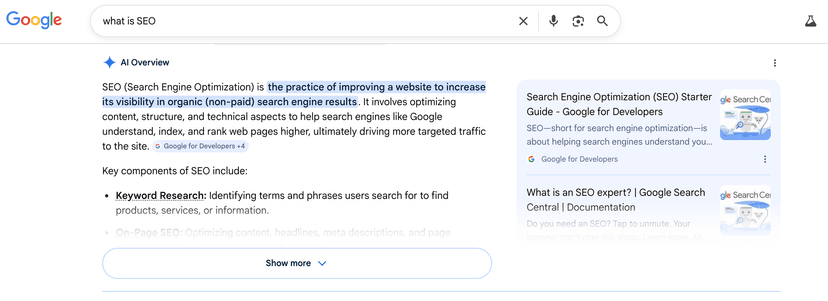
This is the headline trend that you can come across in most of the SEO trend blog posts.
AI Overviews now appear on roughly 25–50% of Google searches, depending on the study and the market. For informational queries — "how does x work", "what is y" — they trigger around 39% of the time. In some categories, such as B2B tech, the exposure rate reaches 70%+.
This clearly shows that the answer to most questions is now printed on the search page itself, before any blue link.
Malaysian users get AI Overviews for the same queries as US users. Gemini powers the overviews, and Gemini doesn't care about the country.
If you run an informational blog targeting KL searchers, you're already seeing clicks drop on queries even if you're ranking high on search result pages.
Informational content, which now ranks #1, often appears below the AI Overview.
Users read the overview, get their answer, and close the tab. A study by Stackmatix shows that click-through rates have dropped by 15–46% for queries where AI Overviews appear.
2. Zero-Click Search Is The New Baseline
A recent study shows that around 60% of all Google searches now end without a single click to an external website.
On searches where an AI Overview appears, the zero-click rate jumps to roughly 83%.
In Google AI Mode — the conversational search experience — 93% of sessions end without any external visit at all.
That's why you need the right SEO roadmap to allow Google to cite you as a resource for the AI overview.
If your SEO strategy is "get clicks from Google", you're optimising for something that's shrinking year over year.
The strategy that replaces it is visibility-first — being seen, cited, and remembered inside the search experience itself, not necessarily pulling the visitor to your site.
We understand it is hard for SMEs to keep up with the rapid changes.
Clicks feel real.
Brand mentions in an AI answer feel abstract.
But the data is what the data is.
3. Generative Engine Optimisation (GEO) Is Not Optional
Generative Engine Optimisation (GEO) is all about optimising your content so AI engines cite it in their generated answers.
It's not a buzzword anymore. It's the real thing that needs to be added to your overall SEO strategies and positioned as the top-most priority.
Most Malaysian agencies now list GEO or AEO among their services. Most don't actually do it properly, but that's a separate problem.
The practical work of GEO overlaps with good SEO, but the emphasis shifts:
- Answer-first Structure: The first 50–100 words of every section directly answer a specific question.
- Structured Formats: Tables, ordered lists, and FAQ blocks. Comparison pages with three tables earn 25.7% more ChatGPT citations per AirOps research
- Original Data: Proprietary surveys, benchmarks, case study numbers. AI engines prefer citing primary sources over rewrites.
- Authors with Real Credentials (E-E-A-T): Anonymous content doesn't make the citation shortlist anymore.
- Schema Markup — Article, FAQPage, HowTo, LocalBusiness in JSON-LD, nested where it makes sense.
The winners of GEO in 2026 aren't the biggest sites. They're the clearest sites.
A well-structured 1,200-word answer beats a rambling 3,500-word one every time.
(For the full framework, see the 2026 SEO roadmap.)
4. E-E-A-T Becomes The AI Trust Factor
E-E-A-T — Experience, Expertise, Authoritativeness, Trustworthiness. This ranking factor originated as a Google human-rater concept.
In 2026, it became one of the important criteria that help AI crawlers assess the credibility and legitimacy of the content they cite in response to people's search queries.
That's a meaningful shift.
Before, E-E-A-T influenced rankings through a thousand small signals. Now, it influences whether your content gets pulled into an AI answer at all.
How to make E-E-A_ to work for you in 2026:
- Named authors with verifiable real-world experience in the topic (LinkedIn profile, portfolio, speaking history)
- Original research, surveys, proprietary data
- Clear source citations — authoritative outbound links to government sites, peer-reviewed papers, industry reports
- Consistent topical focus — a site that publishes on one area deeply outperforms a general-purpose blog
- Brand mentions and citations across the web, not just backlinks
Brands are 6.5x more likely to be cited in AI answers from third-party sources than from their own domains. That stat alone should reshape how Malaysian businesses think about digital PR.
5. Brand Authority Matters More Than Backlink Count
This one is tied to E-E-A-T but worth separating.
The SEO industry spent 15 years counting referring domains. That metric still matters, but it's no longer the headline number.
AI systems reward brand visibility in 2026, where you should be focused on getting mentioned in news articles, cited in research, referenced on Reddit and Wikipedia, discussed in YouTube videos, and named in industry reports.
A brand that shows up everywhere, even without a direct link, builds the authority signal that AI engines trust.
Digital PR and thought leadership are no longer "nice to have" for Malaysian businesses.
They're the authority engine.
Only 19% of SEO respondents in a recent 2026 survey named brand authority as a strategic priority, despite 81% already practising backlinks and digital PR as routine practices.
That gap is where the opportunity sits.
6. Content Format Matters More Than Word Count
The days of long-form content required to rank on search result pages are long gone.
In 2026, the content types AI engines cite most often in their answers are:
- Listicles — 21.9% of AI citations. Commercial queries cite listicles 40.86% of the time.
- Articles — 16.7% of citations. Informational queries cite articles 45.48% of the time.
- Product pages — 13.7% of citations
Word count isn't the ranking lever.
Structure is.
A 1,500-word listicle with clear H2s, a table, and FAQ schema often outperforms a 4,000-word narrative essay on the same topic in both traditional SERPs and AI answers.
Malaysian publishers should stop trying to hit arbitrary word counts.
Start matching the format to the intent.
7. Voice Search Finally Matters (For Real This Time)
Voice search has been "the next big thing" for ten years.
In 2026, it finally delivered.
The reason isn't smart speakers
Apple is integrating Gemini to power Siri.
Every iPhone in Malaysia now has Google's AI assistant one hold-button away. Voice queries flow through the same AI answer layer as typed searches, and the citations Gemini pulls from are the same sources it uses for AI Mode.
What changes in practice:
- Conversational, question-shaped keywords matter. For example," where can I find the best nasi lemak in Klang" rather than "nasi lemak Klang".
- Local intent queries spike in volume, and these voices are commonly local.
- Google Business Profile data is becoming more important because AI-driven answers to location queries rely on it.
For local Malaysian businesses, this is actually good news.
AI Overviews only trigger on about 7% of local searches, which means traditional local SEO that consists of GBP, citations, and reviews would still drive most of the results for neighbourhood businesses.
8. Core Web Vitals For Lasting User Experience
If your site loads slowly, nothing else you do will matter much.
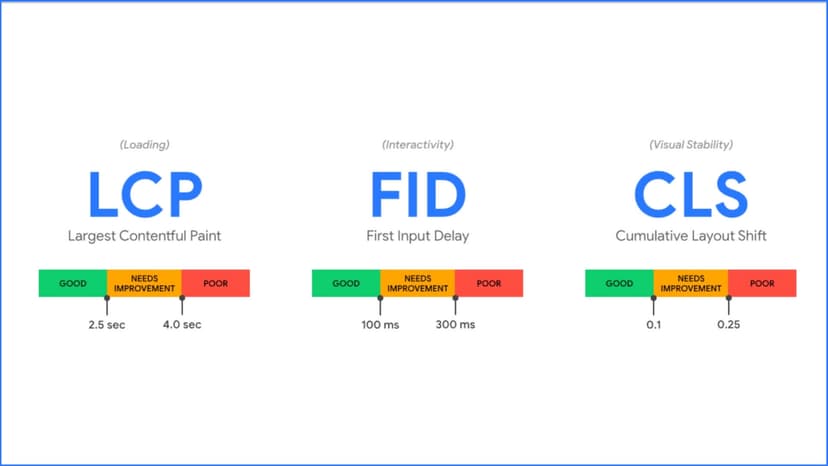
The 2026 thresholds worth memorising:
- Largest Contentful Paint (LCP): under 2.5 seconds
- Interaction to Next Paint (INP): under 200ms (this replaced FID in 2024 and stayed)
- Cumulative Layout Shift (CLS): under 0.1
Over 90% of Malaysians access the web via smartphones. A slow mobile site fails Core Web Vitals, fails users, and fails the AI parsing layer.
All three failures cost you rankings and citations.
This isn't a trend so much as a baseline. If you're still discussing whether site speed matters, you're three years behind the conversation.
9. The Death Of Generic Content
Google's March 2026 core update and the fast spam update on March 24 both targeted one thing above all else.
Thin content created in large volumes, parasites, outbound link schemes, and cloaking.
"Scaled content abuse" is now a specific spam policy violation.
Publishing 200 AI-written articles a month with no human expertise or original data isn't a growth strategy.
It's a de-indexing risk.
What survives the 2026 search engine algorithm:
- Content with genuine experience signals (photos, screenshots, case study numbers, first-person examples)
- Original research or data
- Named expert contributors
- Tight topical focus — a site that covers one subject deeply, not forty subjects shallowly
Malaysian SMEs that used content mills or cheap freelance writers to pump out generic "Top 10 tips" posts saw their visibility drop throughout 2025 and into 2026.
The cost of writing well went up. So did the reward.
10. Local SEO Becomes The Safe Harbour

One honest bright spot in all this.
As mentioned earlier, AI Overviews trigger on just 7% of local searches. E-commerce queries trigger them only 4% of the time.
Transactional queries? Even less.
If your business depends on local or transactional traffic, like a dentist in Petaling Jaya, a car workshop in Subang, an aesthetic clinic in Bangsar, a Shopify store selling to Malaysian buyers, AI Overviews barely touch your SERP.
The 2022-era Local SEO playbook largely still works for you.
What matters for local SEO in 2026:
- Google Business Profile: Fully filled, with real photos, correct hours, and weekly updates.
- Local citations: Directories such as Yellow Pages MY and Foursquare, as well as industry-specific listings.
- Reviews: Real reviews from real customers, with responses.
- Location-specific landing pages: One proper page per service area.
- Consistent NAP (Name, Address, Phone) across the web.
- Local links: From Malaysian publications, industry associations, community pages
If you're a local business owner in Malaysia reading a trend list stuffed with AI jargon and feeling overwhelmed, breathe.
Most of it doesn't apply to you yet.
Focus on the basics of SEO, and you'll do fine.
11. Shift From Traffic to Brand Visibility
Here's the harder pivot.
The metrics that defined SEO success for 20 years are no longer enough.
Older metrics like organic traffic, keyword rankings, and click-through rate still matter, but for AIO, you should be focusing on more.
New 2026 metrics to add alongside them:
- AI citation rate: How often your domain gets cited in AI Overviews, ChatGPT, Gemini, and Claude for your target queries.
- AI Overview exposure: What percentage of your target keywords trigger an AI Overview, and whether you're inside it
- Brand mention volume — mentions across the web, even without a link
- Branded search growth — a healthy second-order effect when AI Overviews cite you without a click
- Share of voice in AI answers — your citation frequency vs competitors across a defined query set
Only 14% of SEO teams surveyed in early 2026 track AI citation visibility.
Only 11% monitor branded search or share of voice.
The measurement gap is huge, and that's where small and medium businesses can make an impact.
12. What You Can Stop Worrying About
Quick honesty section. A few things that felt important in past trend lists and genuinely don't matter much in 2026:
- LSI keywords: The term never existed in any Google patent. Topical coverage is real. LSI is not.
- Keyword density: AI interprets context now. Natural writing always beats density targets.
- Exact-match keyword anchor text in backlinks — over-optimised anchors still flag as manipulation
- PBNs (Private Blog Networks): The March 2026 spam update specifically targeted outbound link schemes. Short-term lift, long-term risk.
- Mass guest posting: Low-quality guest posts on sites that publicly accept them add nothing. Real relationships, real publications still work.
- Chasing word count for its own sake: See trend #6
Frequently Asked Questions
What are the biggest SEO trends in Malaysia for 2026?
The five biggest trends are AI Overviews becoming the default top of SERP, zero-click search passing 60% of all queries. Generative Engine Optimisation (GEO) is going mainstream, E-E-A-T is evolving into an AI trust filter, and brand authority matters more than raw backlink counts.
Is SEO still worth doing in Malaysia in 2026?
Yes. SEO still delivers the highest long-term ROI of any digital marketing channel, but the goal has shifted from "clicks from blue links" to "visibility across search surfaces." Businesses that adapt keep winning. Those still running the 2022 playbook lose quietly.
What is Generative Engine Optimisation (GEO)?
GEO is the practice of optimising content so AI engines, Google's Gemini, ChatGPT, Claude, and Perplexity cite it in their generated answers. It sits alongside traditional SEO, not as a replacement. The work overlaps significantly: clear structure, original data, named authors, schema markup, and answer-first writing.
Are AI Overviews showing in Malaysia?
Yes. Google's AI Overviews are active across Malaysian SERPs and trigger on the same query types they do in other markets, with a heavy focus on informational searches and a lighter focus on local and transactional ones. Google AI Mode (the chat-style experience) remained US-only through early 2026 but is expected to roll out globally by the end of 2026.
How much has zero-click search grown?
Around 60% of all Google searches now end without a click, up from approximately 50% in 2019. On searches that trigger an AI Overview, the zero-click rate is about 83%. Specifically in Google AI Mode, 93% of sessions end without an external visit.
Should I still build backlinks in 2026?
Yes, especially in competitive niches. But the link-building playbook has changed. Digital PR, original research, and real partnerships work. PBNs, mass directories, and cheap guest posts are actively penalised. Moreover, the March 2026 spam update specifically targeted outbound link schemes. Quality over quantity isn't a slogan; it's the threshold.
How do I track AI Overview visibility?
Ahrefs, Semrush, Similarweb, Profound, Otterly, and several newer tools now report AI Overview appearance and citation tracking. Google Search Console tracks AI Overview and AI Mode impressions, though SEOs cannot filter the data to see where impressions or clicks come from — traditional search, AI Overviews, or AI Mode.
Is local SEO in Malaysia affected by AI Overviews?
Only lightly. AI Overviews trigger on roughly 7% of local searches. For most local Malaysian businesses, such as clinics, workshops, cafes, and service providers, traditional local SEO still drives the majority of results. Google Business Profile, reviews, local citations, and location pages remain the core levers.
How long before AI Overviews fully replace traditional search results?
They won't, entirely. The model is coexistence, AI Overviews above traditional results for qualifying queries, classic blue links below. Google AI Mode is the more disruptive format because it removes blue links entirely, but it requires users to actively switch tabs. Adoption depends on user behaviour, and most Malaysian users still default to classic search.
Final Thoughts
The trend that matters most isn't on this list.
It's the willingness to drop strategies that once worked.
SEO for Malaysia in 2026 rewards businesses that can look at a 40-article blog grinding out generic content and say, "This isn't working anymore, let's do fewer and better."
It punishes businesses that double down on 2022 tactics because they worked once.
Don't chase every trend on this list.
Pick the two or three that are actually relevant to your business, do them properly, and ignore the rest.
One important question that you should ask right now.
"If a potential customer asks ChatGPT or Google AI Mode about my industry today, do I get mentioned?" If the answer is no, or you don't know, you need to start working on the SEO strategies.
What trends are you seeing play out in your own SEO work in 2026?
Drop a comment below, or get in touch if you want help mapping these to your business.